Task Management Software


New Articles New Articles RSS feed subscribe
 
Interactive Task Priority Template
We all have to cope with dozens of our daily tasks, and it is easy to lose effectiveness while approaching all this abundance of commitments Interactive Task Priority Template


New Checklists News RSS feed subscribe
 
Interactive Process Action Plan

This Interactive Process Action Plan will be helpful both to employees and employers to know their duties and rights in terms of Interactive Process

Interactive Process Action Plan


Home » Solutions » Articles » Quality assurance: five stages Six Sigma Project
Quality assurance: five stages Six Sigma Project  

Quality assurance: five stages Six Sigma Project


How to improve QA department productivity
in 3 minutes
Total Quality Management with VIP Task Manager Professional

Six Sigma is a methodology of quality management that gives a company tools for business processes improvement. This approach allows to manage quality assurance and business processes more effectively, and reduce costs and increase company profits. The fundamental principle of Six Sigma approach is the customer satisfaction through implementing defects-free business processes and products (3.4 or fewer defective parts per million).


 Play Demo
Quality assurance: five stages Six Sigma Project

Six Sigma approach determines factors that are important for product and service quality. This approach contributes to reduction of the business process deviation, improvement of opportunities and increase of production stability.

There are five stages in Six Sigma Project:

  1. Defining
    The first stage of Six Sigma project is to define the problem and deadlines to solve this problem. The team of specialists considers a business process (e.g., production process) in details and identifies defects that should be erased. Then the team generates a list of tasks to improve the business process, project boundaries, customers, their product and service requirements and expectations.
  2. Measuring
    On the second stage the business process is to be measured and current performance is to be defined. The team collects all data and compares it to customer requirements and expectations. Then the team prepares measures for future large-scale analysis.
  3. Analyzing
    As soon as the data is put together and the whole process is documented, the team starts analysis of the business process. The data collected on stage two “Measuring” are determine root reasons of defects/problems and identify gaps between current performance and new goal performance. Usually the team specialists begin with defining the fields in which employees make mistakes and cannot take effective control of the process.
  4. Improving
    On this stage the team analyzes the business process and works up some recommendations, solutions and improvements to erase defects/problem or achieve desired performance level.
  5. Controlling
    On the final stage of Six Sigma Project the team creates means of control of the business process. It allows the company to hold and extend scale of transformations.

In order to accomplish Six Sigma Project, the project manager can assign a list of tasks following these five stages. He can use VIP Task Manager software that allows the project manager to create and assign tasks to the project team and track the task performance. VIP Task Manager is specially designed for management of projects. This software solution combines all the functions required for project planning, team management, communication and everyday project monitoring.

Quality assurance: five stages Six Sigma Project

In VIP Task Manager all five stages will be displayed as task groups and each of them will have several tasks inside. For example, the task group 'Defining' that is the first stage of Six Sigma Project, has several tasks:

  • Defining
    • Identification of improvement opportunities.
    • Choosing the best business process opportunity to work on.
    • Defining the process boundaries, customer requirements and goals.
    • Developing the business case and prepare a project char

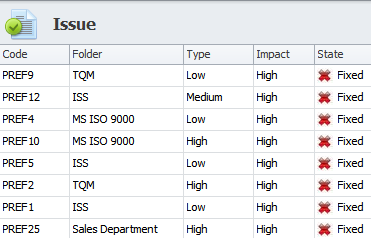
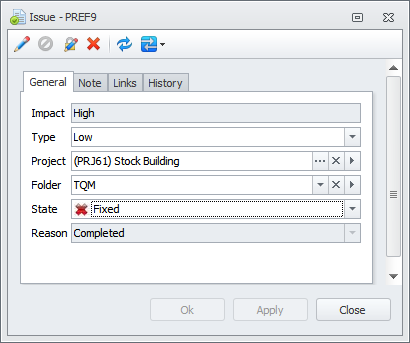
The project manager can assign tasks to one or several team members, and they will be notified on task assignments by automatic notifications. The project manager can set permissions to a task and task group, so team members will watch only the tasks and task group they are assigned to. Each team member will be added in the project database as a resource and have personal protected login.

For each task the project manager can set due date, start and finish dates, actual and estimated times, status and priority. He can have full access to the project database so he can watch and supervise the project and track procrastinations and increase task priorities. When a task is completed by a resource, the project manager receives notification by email or within the application.

VIP Task Manager allows to build reports and store them in text or HTML formats. A project team member can then send the report to the project manager.

Read also a new article about process management - Problems and advantages of Total Quality Management

    Play Demo
 Download Trial
 Free Hosted Trial
     

VIP Task Manager
Task management software
for employees collaboration
Play Demo / Try It FREE

Project Checklists
140 printable checklists
for project management

Learn More / Buy Now


home contact site map my account


Copyright © 2004 - 2012 VIP Quality Software, Ltd. All Rights Reserved.