


 home
home contact
 site map
 my account


|
| |||
 |
|
 |
VIP Task Manager |


|
| |||
|
|
|
VIP Task Manager |
Virtual collaboration for business is a direct way to decrease administrative costs by minimizing amount of papers turning over the organization and time being spent for interacting between employees. The framework comprises two essential components: the theory of collaboration (purpose, goals, methodology and regulations) and appropriate teamwork tools to carry it out in practice. Teamwork models include different solutions for exchanging business information, so let’s consider some virtual collaboration examples:
| ||
As you can see, due to a variety of purposes, complex virtual collaboration tools should support a number of services that cover different areas of practical interaction between employees. Effective collaborative software works as a collaboration portal where people can access different types of the tools (according to their current needs) and co-operate with their colleagues at various working matters. |
  Play Demo Play Demo
|
|
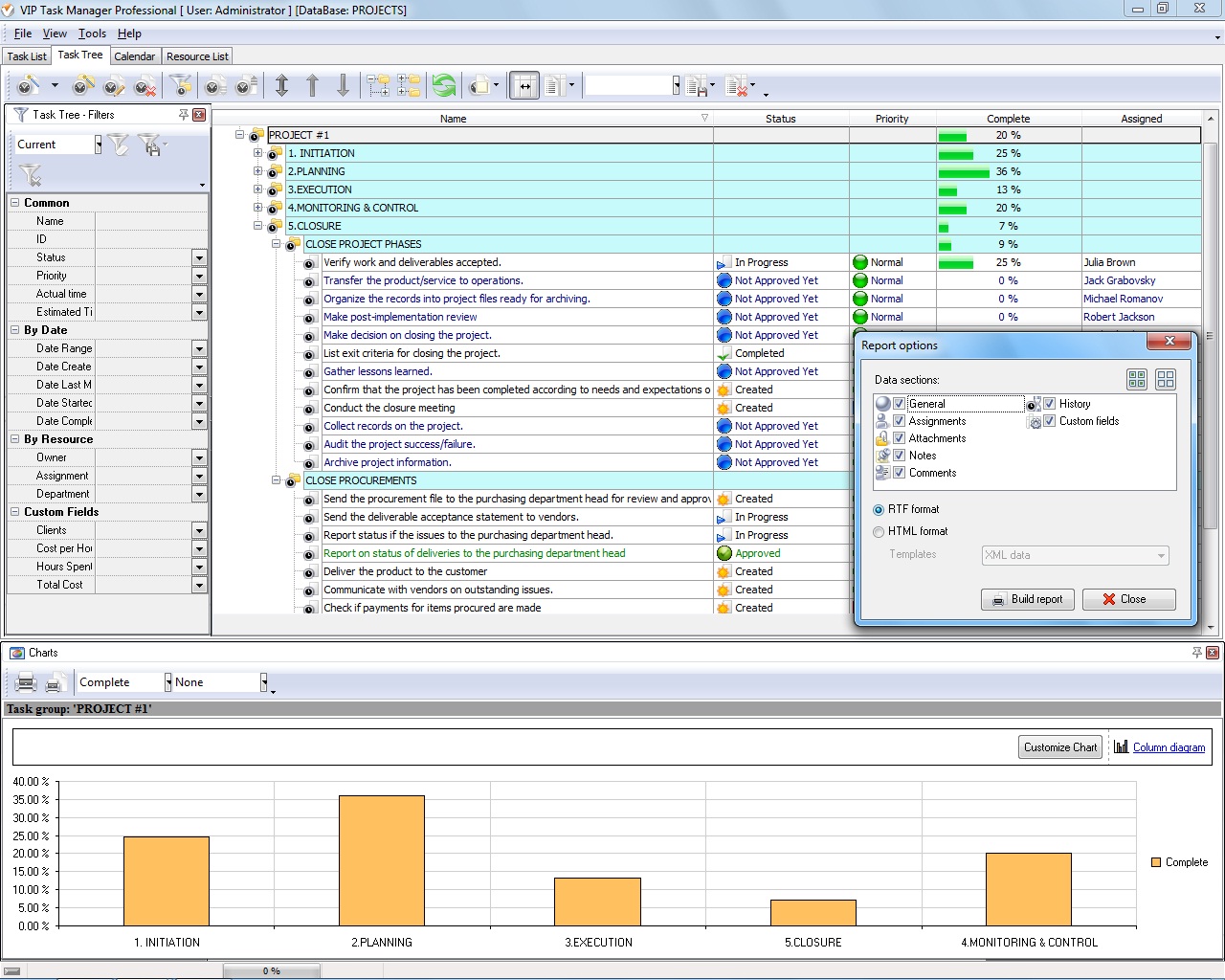 |
A review of specific software example: VIP Task Manager is a collaborative suite that includes a set of virtual collaboration tools to cover different needs, mainly for tasks, time and project management. This software functions as a virtual network of computers (with client components installed on them) connected via LAN to a single server component (securing a shared database) that resides at your corporate server. Some examples to resolve different challenges are the following: |
|
|
||
 Play Demo
|
| |||
|
|
|
VIP Task Manager |

 home
home contact
 site map
 my account