


 home
home contact
 site map
 my account


Case management solutions are computer programs for collecting, accumulating and systematizing an experience obtained during the business activities. The proposed unit of such a systematization is “case” that means a certain precedent (a situation happened once before, or currently running) which is significant enough to be taken as a model for future activities. This practice enables the organization to solve challenges with significantly better efficiency and productivity, as time of coping with a sequence of existing (active) cases can be minimized. Besides the already closed business cases, those tools will make sure that all active cases being managed by an organisation are under proper control, enabling the processes and activities required to drive cases being quickly and effectively applied. The process can be briefly explained with the following schema:
How the case management solutions work? Legal companies include any type of company providing technical support, or juridical and medical services, but actually the case management works for almost any kind of organization. That’s why case management software can be used in many industries and types of businesses to support and improve their problem-solving practice. The main functionality and features ensured by such a case management program are the following: | ||
|
  Play Demo Play Demo
|
|
 |
|
|
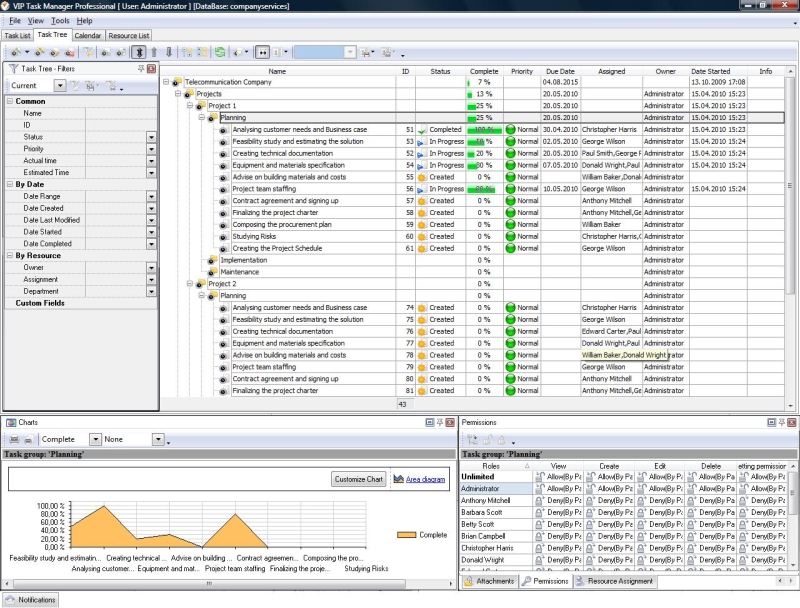
VIP Task Manager is task and time management software that can be used as a case management solution as it works in real-time regime and is effective in terms of tasking your business activity (planning, controlling, sharing, assigning tasks). It can speed up the case processing practice as it allows categorizing and prioritizing your cases (currently active and already closed), and allows you to search for them in terms of different attributes. It provides real-time alerting, notification and escalation of working issues such as cases, tasks, appointments, etc. |
||
 Play Demo
|
| |||
 |
|
 |
VIP Task Manager |



 home
home contact
 site map
 my account