| The mission of Client department is to establish long-term relations with clients to maximize business profits and earn an excellent customer support experience. Client department tends to accomplish its mission by performing a set of functions. There can be outlined three key functions of Client department: |
-
Company representation – Client department serves as an ambassador of company to clients and customers, establishing consumer liaison and communication.
-
Client question and conflict management – Client department tends to resolve customer conflicts, creates client contracts, letters of intent, addendums, client reports etc., and manages a repository for client accounts and information.
-
Customer surveys and brand management – Client department contributes to improvement of marketing activities and assists with product development and promotion.
| 
|
In order to perform these key functions, Client department needs to use a workflow management system. Such a system offers flexible solutions to plan, manage, track and report tasks and duties related to the functions. Combinations of tasks and duties that staff members of Client department perform from day to day turn into workflows to be created and managed by a workflow management system. For example, staff members can use such a system to organize the following daily activities:
- Scheduling client support phone calls and oral consultations.
- Planning, performing and tracking to-do lists related to email replies and client feedback.
- Creating and managing meeting agendas and event calendars.
- Setting reminders, priorities and deadlines for urgent and important matters.
|
|
As an effective workflow management system, VIP Task Manager Pro offers flexible solutions for Client department to manage the following key subjects:
- Creating to-do lists, designing work schedules and using task templates to organize workflow processes and groupwork in Client department.
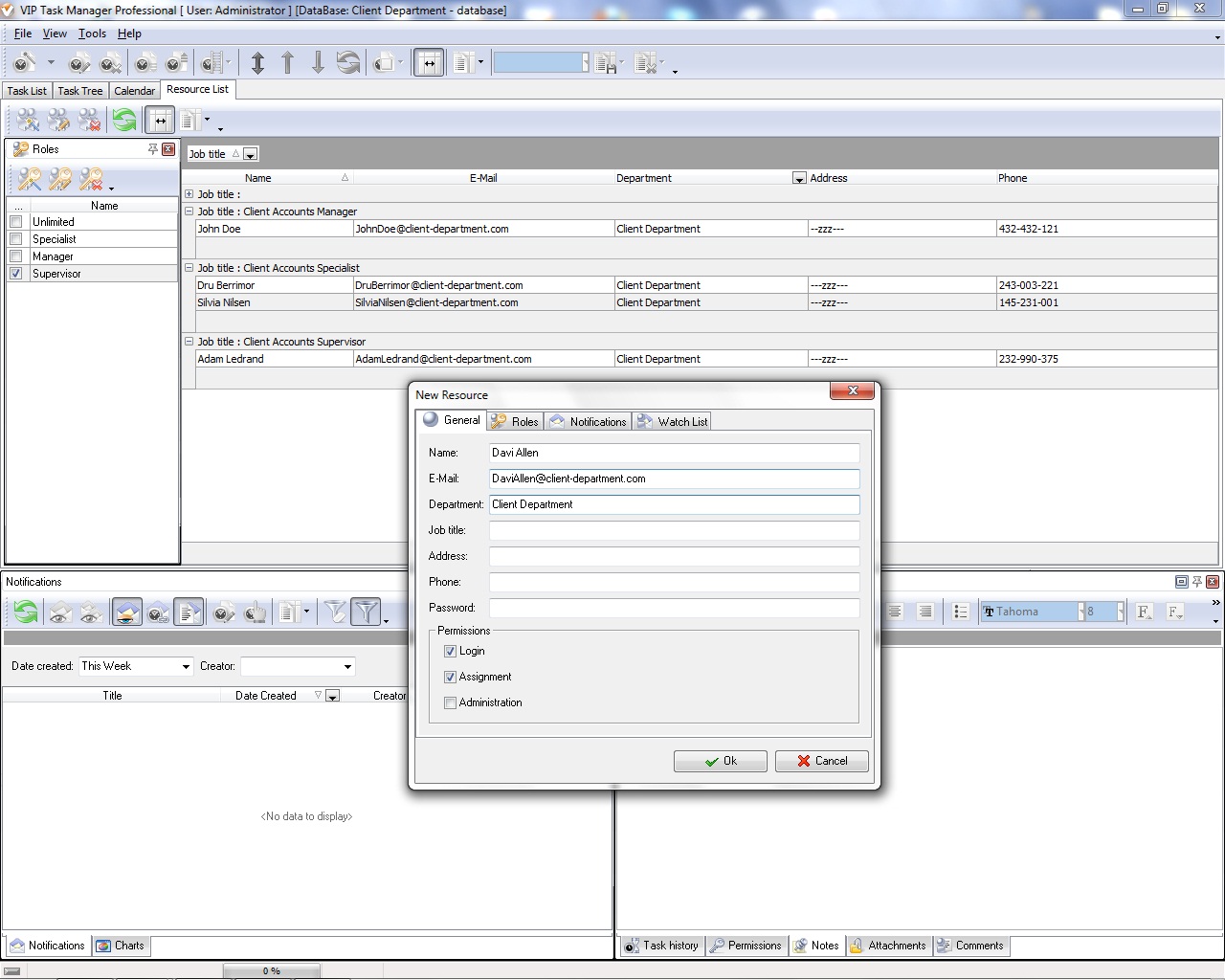
- Coordination of all employees involved in current processes and teamwork in accordance with established roles, assignments and permissions levels.
- Tracking and analyzing current work situations by using notification tools, real time task tracking tools, and task reporting tools.
- Keeping information about department workflows (including tasks, to-do lists, schedules, templates and documents) and client accounts in a single database.
|
|